2nd Edition of Preventive Medicine World Conference 2026
Speakers - 2026
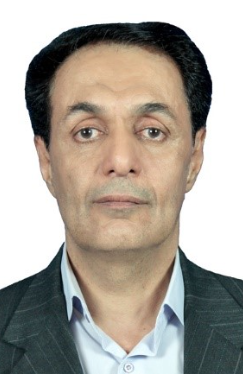
Mohammad Reza Ahmadi Zand
Mohammad Reza Ahmadi Zand
- Designation: Yazd University
- Country: Iran
- Title: Transforming Preventive Cognitive Healthcare Through Dynamical Systems Modeling of Early Language Development
Abstract
Preventive healthcare increasingly recognizes that lifelong health trajectories are strongly influenced by developmental processes occurring during early childhood. Among these processes, language acquisition represents a fundamental cognitive milestone associated with educational achievement, social participation, mental well-being, and long-term health outcomes. This study introduces a nonlinear dynamical systems framework that models early language learning as an evolving process governed by deterministic yet complex interactions.
The proposed model is formulated as a discrete-time skew-product dynamical system Fβ(x,y)=(f(x),gβ(x,y)), where x represents developmental progression, y denotes language-learning performance, and β acts as a learning-intensity parameter. The developmental interval is partitioned into three regions corresponding to the single-word, two-word, and sentence-construction stages. Fixed-point analysis, Jacobian eigenvalues, Lyapunov exponents, bifurcation structures, and attractor properties are investigated theoretically and numerically.
Results reveal multiple developmental regimes governed by the learning parameter β. Stable attractors emerge for lower parameter values, whereas critical transitions, intermittency, and complex basin structures arise near bifurcation thresholds. Numerical simulations reproduce qualitative features frequently observed in empirical language-development studies, including developmental spurts, heterogeneous learning rates, and rapid vocabulary expansion.
From a preventive healthcare perspective, the framework offers a quantitative approach for identifying atypical developmental trajectories, detecting critical intervention windows, and supporting community-based screening programs. By linking early cognitive development to long-term health outcomes, the proposed model contributes to the broader objective of preventive healthcare and population well-being.
Join us at 2nd Edition of Preventive Medicine World Conference (PRMWC) 2026 in Bangkok, Thailand as we bring together leading health p ...
Read More>>
Organizer
